Best Portable Solar Panels for Camping: What I’ve Actually Used Miles From Nowhere
The best portable solar panels for camping are the ones that disappear into your pack, survive everything you throw at them, and actually work when you need them. After years of taking these things into the backcountry I have a pretty clear picture of what holds up and what doesn’t.
Here’s what I’ve used, what I’d recommend, and what you should know before you buy.
Why a Portable Solar Panel Changes Everything in the Backcountry
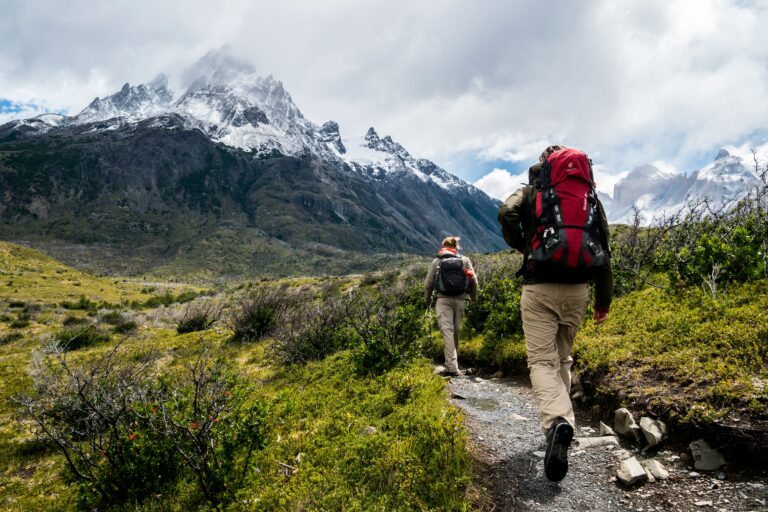
When you’re 20 miles deep into the wilderness there’s no outlet waiting for you at camp. Your phone is your navigation, your camera, your emergency contact, and your flashlight all in one and when it dies out there it’s not just an inconvenience. It’s a real problem.
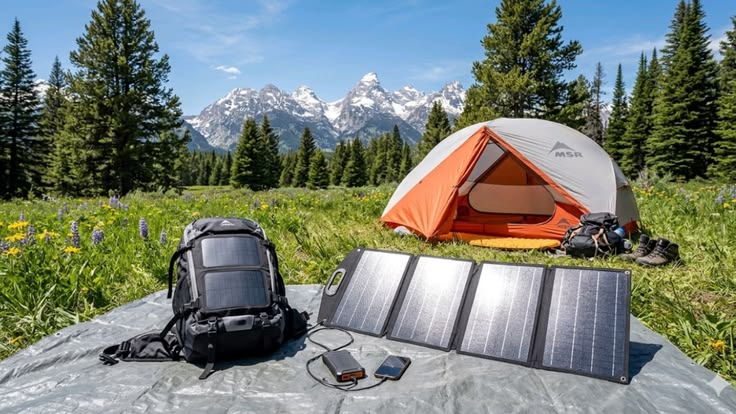
A good foldable solar panel solves that completely. You clip it to the outside of your pack while you hike, it charges your power bank throughout the day, and by the time you make camp you’ve got a full battery waiting for you. It’s as close to unlimited energy in the middle of nowhere as you’re going to get.
The best part is that the best portable solar panels for camping barely weigh anything and fold up small enough to slip into a side pocket or strap flat against your pack. Once you get used to hiking with one you start wondering why you ever went without it.
The Best Portable Solar Panel for Camping: BigBlue 28W
I’ve been using the BigBlue 28W foldable solar panel charger for years now and it’s one of the few pieces of gear I’d replace immediately if something happened to it. That’s how much I trust it.
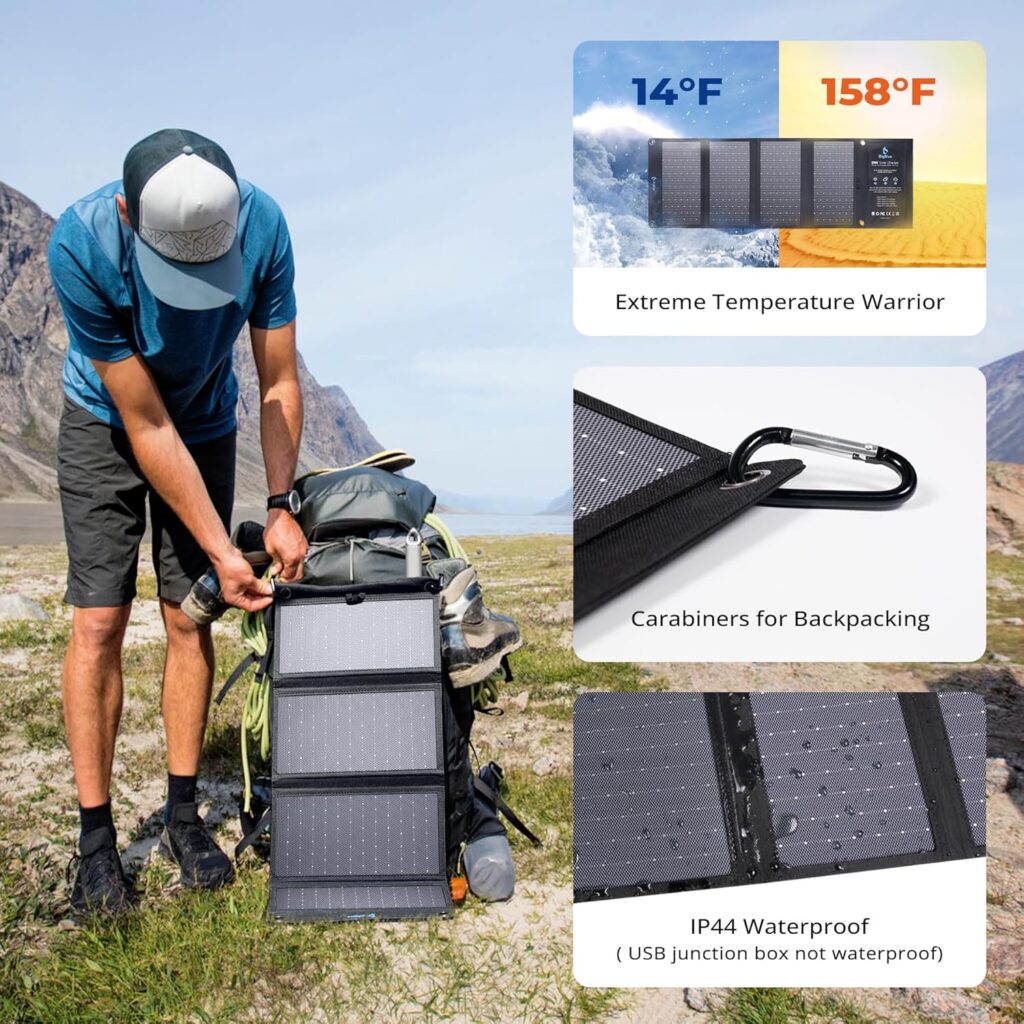
At 28 watts it charges phones and power banks faster than most foldable panels in this price range. It folds up compact enough to strap to the outside of a backpacking pack, which is exactly how I use it. Clip it on in the morning, hike all day, and let the sun do the work while you’re moving. By the time you stop for the night your devices are ready.
The build on this thing is genuinely impressive. I’ve dropped it in water. I’ve stepped on it multiple times. It’s been rained on, shoved into packs, bounced around in truck beds, and dragged through conditions that should have killed it years ago. It’s still going. When a product survives that kind of real world abuse for years without complaining, that tells you everything you need to know about quality.
It has dual outputs, one USB-C and one USB-A, so you can charge two devices at the same time. The built-in ammeter shows you real-time power output which is useful for finding the best sun angle when you set it up at camp.
At $67 with nearly 10,000 Amazon reviews at 4.4 stars and over a thousand people buying it every single month, it’s not just me who thinks this thing is worth it.
BigBlue 28W – CHECK CURRENT PRICE
Who it’s best for: Backpackers, hikers, and anyone going deep into the backcountry who needs a lightweight reliable way to keep devices charged without carrying a heavy power station.
Anker Solix PS30 Solar Panel
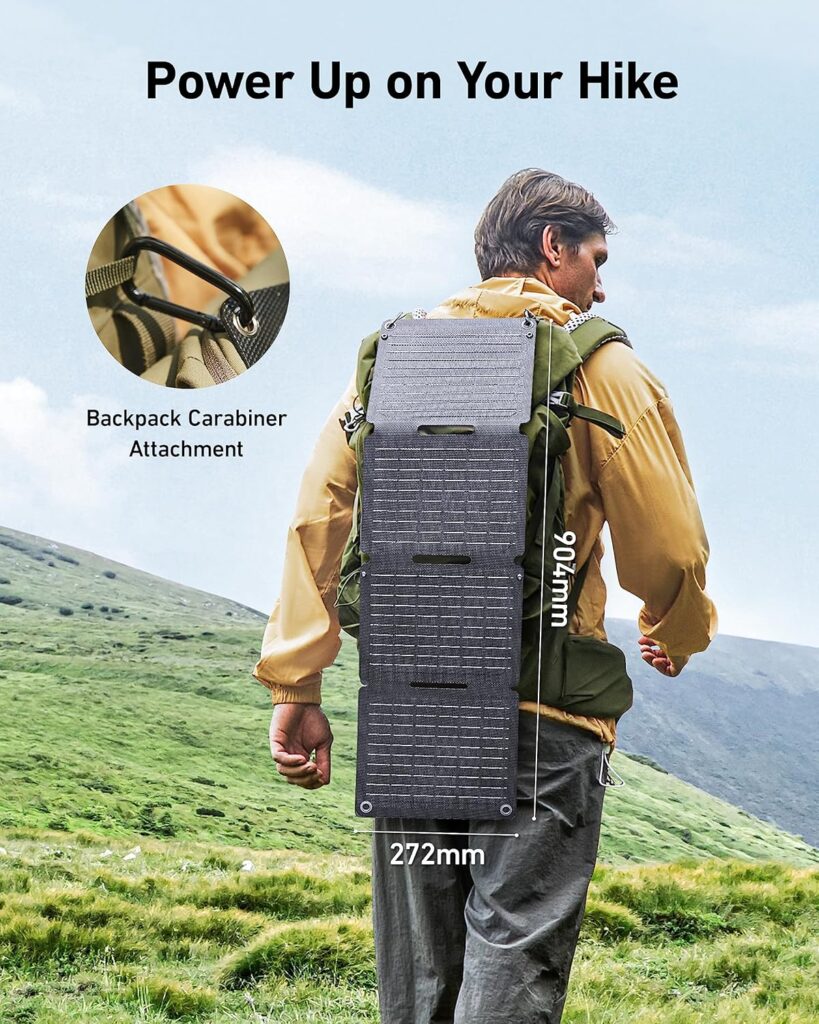
Anker makes some of the most reliable charging gear on the market and their 625 solar panel is a solid alternative to the BigBlue. It’s slightly heavier but the build quality is excellent and Anker’s customer support is hard to beat if you ever have an issue. Good option if you’re already in the Anker ecosystem and want everything to play nicely together.
Anker Solix PS30 — CHECK CURRENT PRICE
Goal Zero Nomad 20 Solar Panel
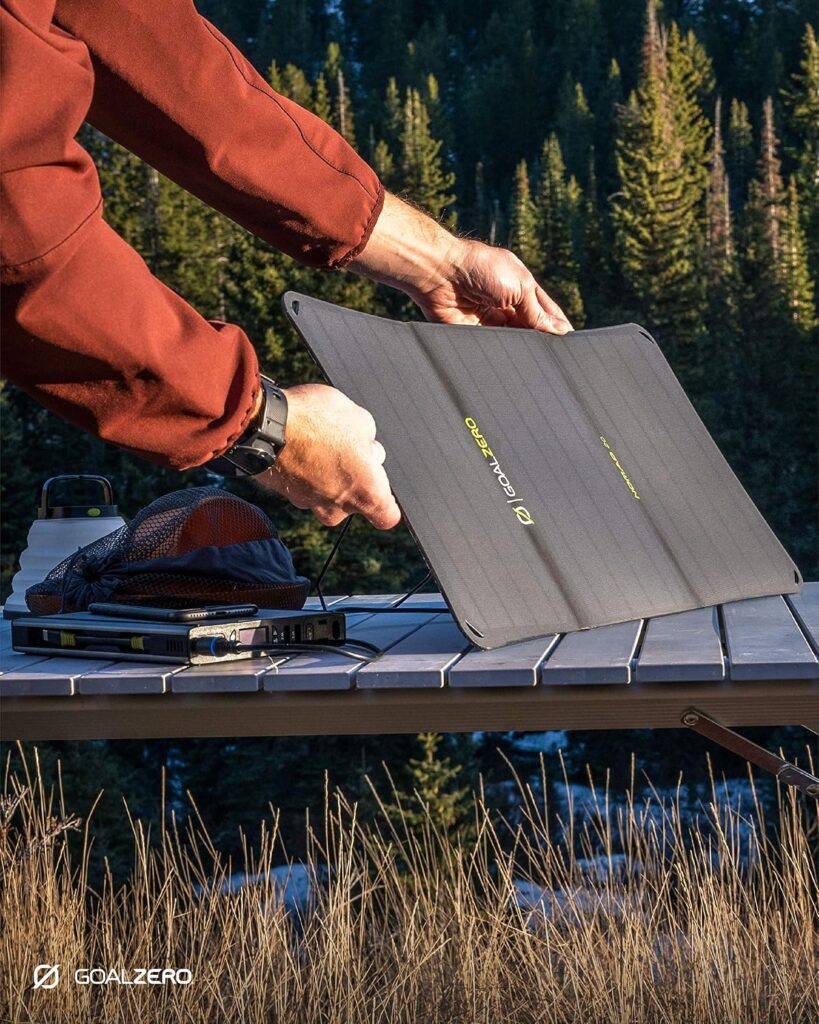
Goal Zero is one of the most respected names in off grid power and the Nomad 20 is their lightweight backpacking option. At 20 watts it’s a little less output than the BigBlue but the build quality and brand reputation are top tier. Compatible with Goal Zero’s Sherpa and Yeti power stations if you’re already running their ecosystem.
Goal Zero Nomad 20 – CHECK CURRENT PRICE
FlexSolar 60W Portable Solar Panels Chargers
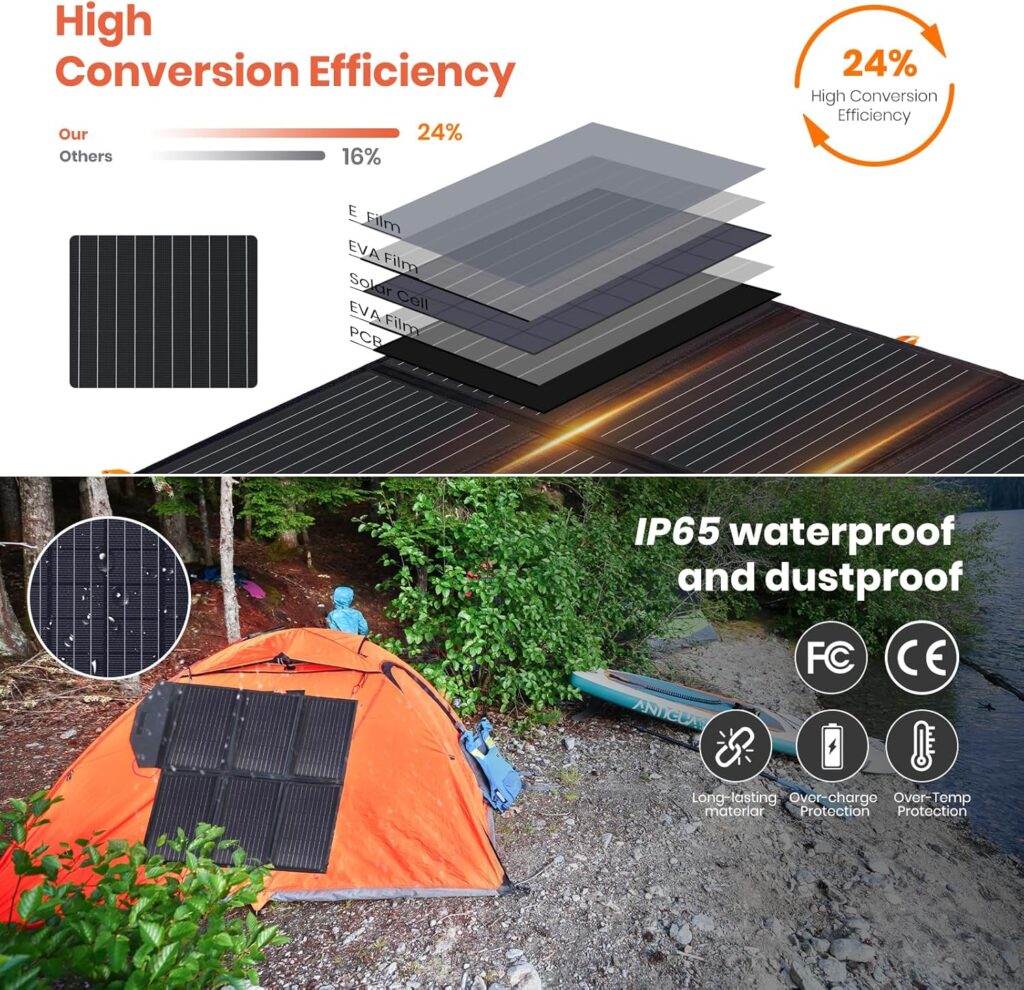
If you’re doing car camping or overlanding and you want serious solar input to keep a larger power station topped off, the FlexSolar 60W Portable Solar Panels Chargers is the step up worth considering. At 60 watts it charges power stations significantly faster than the smaller panels and folds down to a manageable size for truck camping. This one is overkill for backpacking but perfect for a base camp setup where you want maximum solar production throughout the day.
FlexSolar 60W — CHECK CURRENT PRICE
What to Look for in a Portable Solar Panel for Camping
The wattage number tells you how fast the panel charges in ideal conditions. A 28W panel charges a phone in about an hour and a half in direct sun. A 60W panel does it in under an hour. Higher wattage means faster charging but also usually means a bigger and heavier panel, so find the balance that works for how you camp.
Portability matters more than most people think before their first backpacking trip. Once you’ve hiked 10 miles with a heavy pack you start caring very much about every ounce. The foldable panels on this list all pack down small and light. If you’re car camping weight matters less and you can go bigger for more output.
Durability is non-negotiable for backcountry use. Your gear is going to get wet, dropped, stepped on, and generally abused. Look for panels with waterproof ratings and reinforced connection points. The BigBlue has proven itself on this front over years of real use.
The number of output ports matters for groups. If you’re solo, one port is fine. If you’re with a partner or a group, two or three ports means everyone can charge at the same time without anyone waiting around.
Compatibility with your power bank or power station is worth checking before you buy. Most panels charge through USB which works universally, but if you have a specific power station you’re trying to charge via solar make sure the panel’s output matches what the station accepts.
How to Get the Most Out of a Portable Solar Panel While Camping
The biggest mistake people make with portable solar panels is waiting until they get to camp to set them up. The smarter move is clipping the panel to the outside of your pack while you hike so it’s generating power the entire time you’re moving. By the time you reach your campsite you’ve already collected hours of solar energy without doing anything extra.
At camp, angle the panel directly toward the sun and adjust it every hour or so as the sun moves. It sounds like more effort than it is and the difference in output between an optimally angled panel and one just lying flat can be 30 percent or more.
If you’re pairing a solar panel with a portable power station, which is the setup I’d recommend for any trip longer than a day, the panel keeps the station topped off throughout the day while you use it. Check out our guide to the best portable power stations for car camping to see which stations pair best with a solar setup.
best portable power stations for car camping
And if you’re specifically backpacking and want a lighter all-in-one option, our review of the best solar power banks for backpacking covers the integrated units that combine a panel and a battery in one compact package.
best solar power banks for backpacking
The Bottom Line on Portable Solar Panels for Camping
The BigBlue 28W is where I’d start for almost anyone. It’s lightweight, proven, affordable, and tough enough to survive years of real backcountry use. I can say that from personal experience and not just from reading reviews.
If you need more output for a larger setup go with the Rockpals 60W. If you’re in the Goal Zero ecosystem the Nomad 20 integrates perfectly. But for the average camper or backpacker who just wants a reliable panel that works, the BigBlue is the call.
Once you hike into the backcountry with a solar panel clipped to your pack and arrive at camp with a full battery, you’ll wonder how you ever did it any other way.
Disclosure: This page contains affiliate links. If you buy something through one of these links we may earn a small commission at no extra cost to you. We only recommend gear we have actually used.