Best Solar Power Banks for Backpacking: What Actually Works When You’re Miles From Nowhere
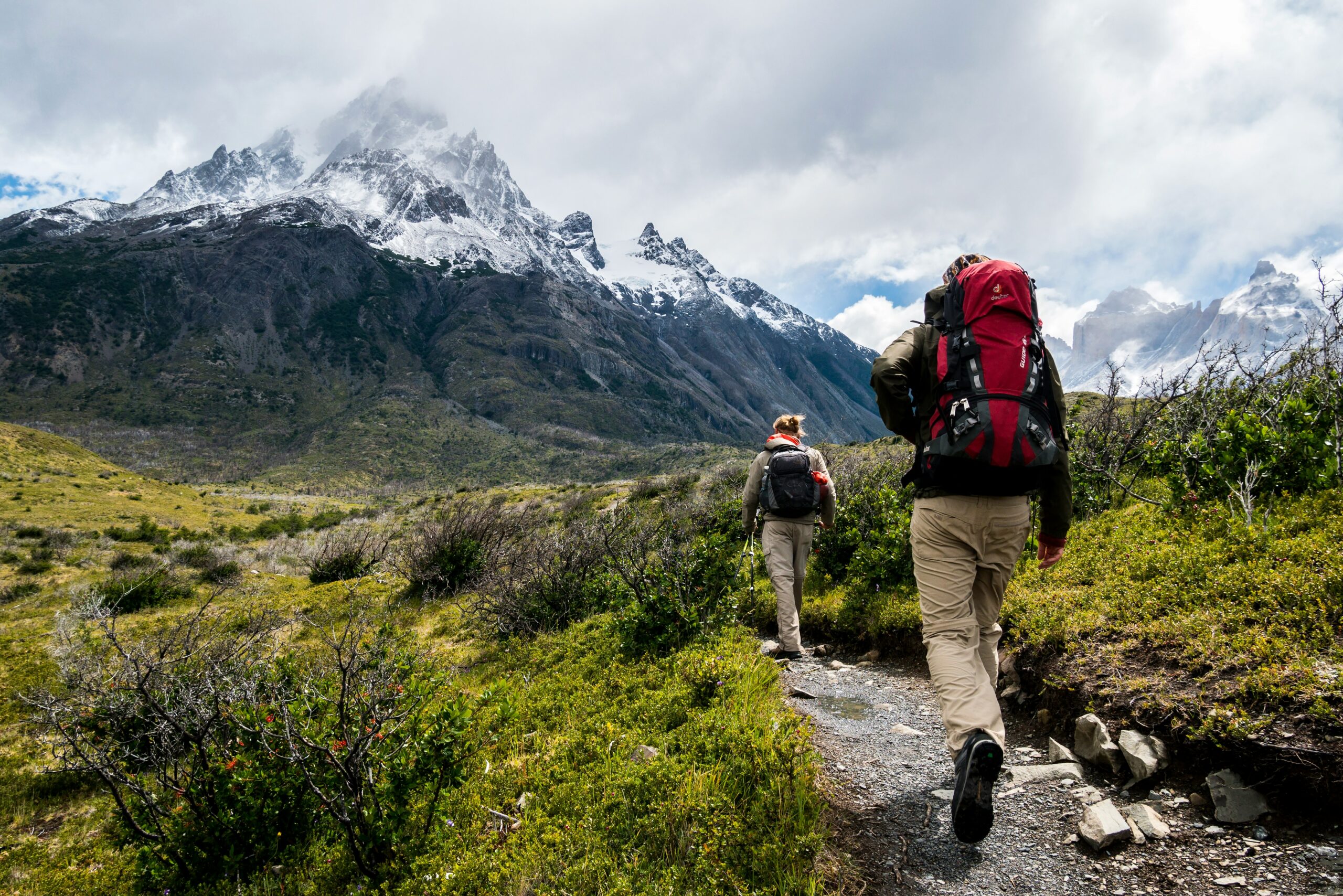
Let me paint you a picture. You’re 6 or 7 miles deep into the Uintah Mountains in Utah, you’re off the main trail trying to find a hidden lake that most people don’t even know exists, and your phone is the only thing keeping you from being completely lost. No signal, no ranger station, just you, your friends, and the Trails app slowly draining your battery.
That was me not too long ago. And the only reason that trip stayed fun instead of turning into a survival situation was a $30 solar power bank clipped to my pack.
So yeah, I take this gear seriously. Not because I’m some extreme wilderness survivalist but because when you’re that far in, having a dead phone is not just annoying. It’s actually a problem.
Here’s what I’ve found actually works out there.
The BLAVOR Solar Power Bank: My Personal Pick and the One I Keep Going Back To
I’m going to start with this one because it’s the one I’ve actually used and abused, and honestly it earned its spot on this list the hard way.
On that same Hidden Lake trip, we made it to the lake and of course there’s a cliff to jump off because why wouldn’t there be. My fiancée at the time took approximately nine years to finally jump while I was treading water at the bottom just waiting. I’m not exaggerating. Nine years. The whole group had already gone twice by the time she finally committed.
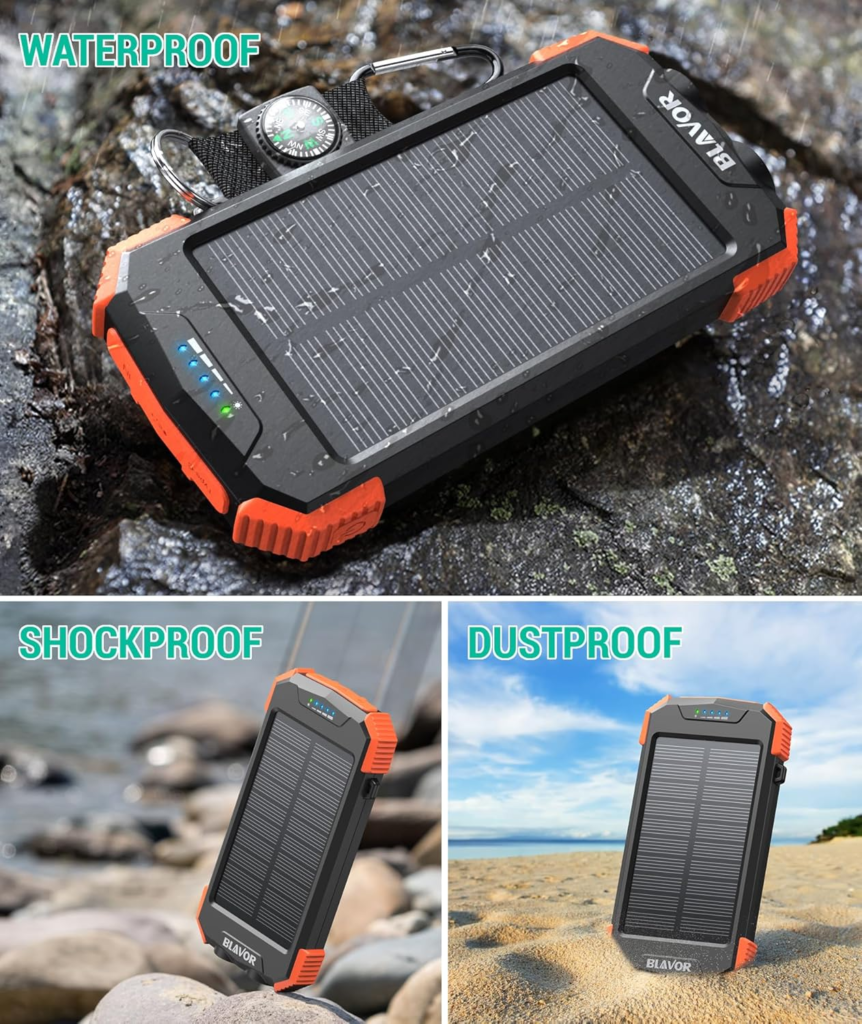
Somewhere in all that chaos the BLAVOR slipped off and dropped about 15 feet straight onto a rock below. We all kind of went quiet for a second. I climbed down expecting to find pieces of it scattered everywhere and instead it just turned on. Charged my phone the whole hike back out like nothing happened.
Waterproof, shockproof, dustproof. Those words are on the packaging but I’m here to tell you they mean something on this one.
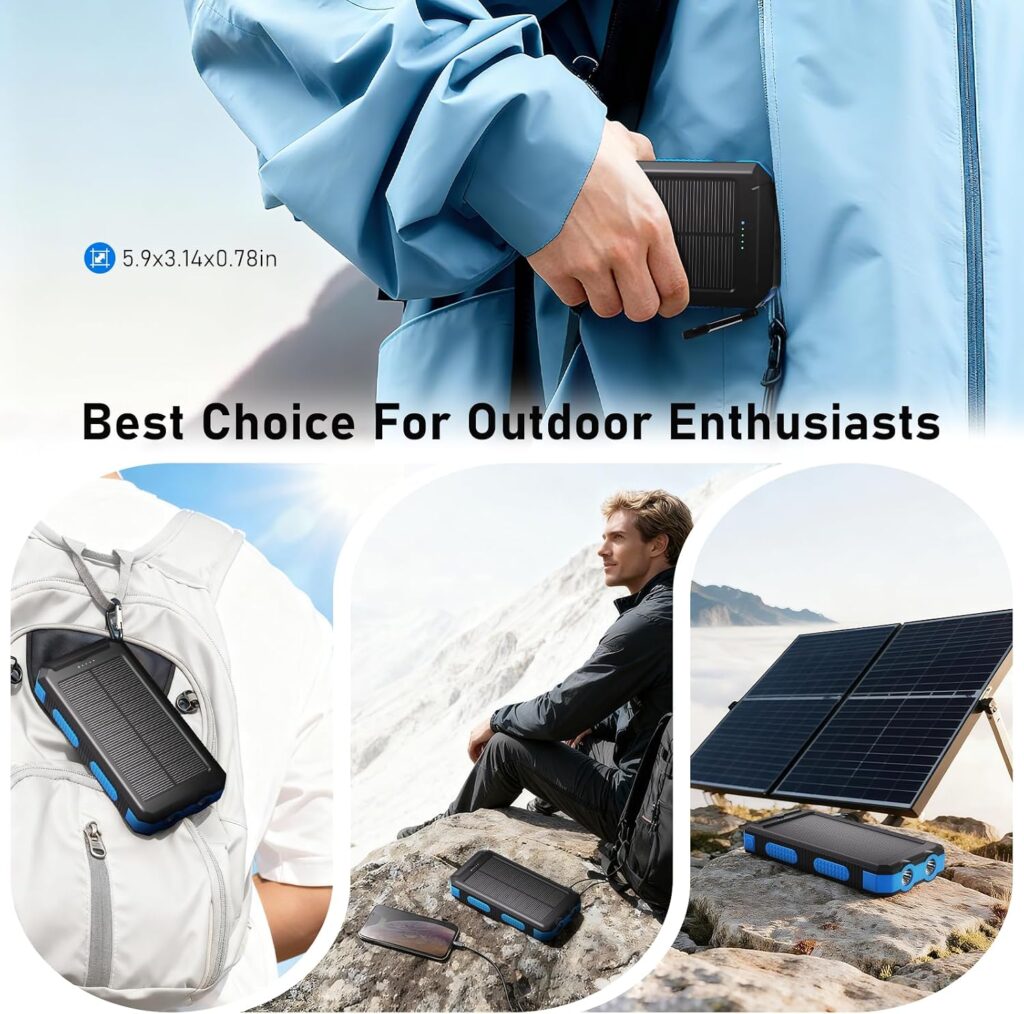
It holds 10,000mAh which gets you about two and a half full phone charges. For a 2 to 3 day trip that’s plenty. It’s got dual USB ports so you and your hiking partner can both charge at the same time, and there’s a built in flashlight that is actually useful and not just a gimmick.
That flashlight thing is kind of underrated honestly. There’s something really nice about being able to charge your phone and have a flashlight going at the same time when you’re setting up camp in the dark. Double whammy. You’re not digging through your pack for a separate headlamp while your phone is dying. Everything is just handled.
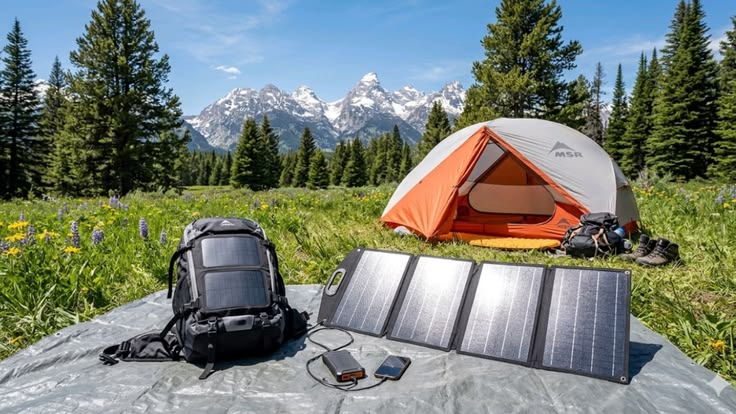
The solar panel on top does work but I want to be straight with you: clip it to the outside of your pack while you hike and it’ll trickle charge throughout the day. Don’t expect to go from zero to full on sunlight alone. Think of the solar as a bonus on top of whatever charge you start with, not your main plan.
You can find the BLAVOR on Amazon for around $30 and it has over 46,000 reviews at 4.3 stars. That’s not luck. That’s a product that keeps delivering for a lot of people in a lot of situations.
[Check Current Price on Amazon](AMAZON LINK)
Durecopow Solar Charger 20,000mAh: For the Long Hauls or Group Trips
If you’re going out for 5 or more days or you’ve got a group where everyone needs to charge, the Durecopow is worth a serious look. At 20,000mAh you’re getting roughly 5 to 6 full phone charges out of one unit. It’s got three ports including USB-C plus it comes with 4 built in cables, so everyone in camp can plug in without scrambling for cords.
The dual flashlight is a nice bonus too — not a gimmick, actually useful when you’re setting up camp after dark. At $22.78 it’s cheaper than the BLAVOR with double the capacity, and it has over 9,600 reviews at 4.2 stars so it’s not some no-name product. The tradeoff is it’s bigger and heavier than the BLAVOR, so if you’re counting every ounce this might not be your move. But for longer trips or group camping the value is hard to argue with.
BigBlue 28W Solar Panel: If You’re Going Really Deep for a Long Time
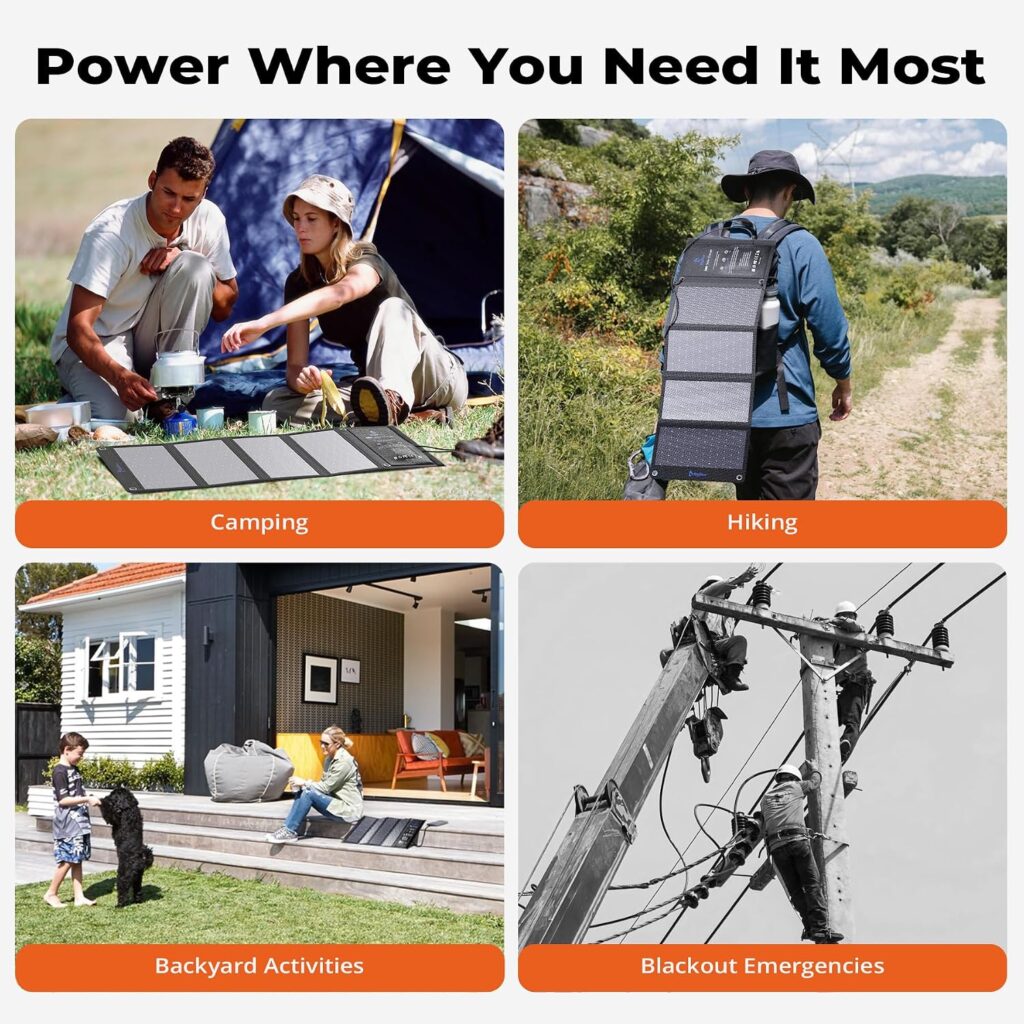
This one is a panel only with no built in battery. You pair it with a separate power bank and clip the panel to the outside of your pack. At 28 watts it charges devices noticeably faster than the built in panels on integrated banks, especially in good sun.
The reason to go this route is unlimited potential on long trips. As long as the sun is out you’re generating power. The tradeoff is you’re carrying more gear and it costs around $70. For most backpackers the all in one banks are the simpler call, but if you’re a week deep in the wilderness this setup makes a lot of sense.
GOODaaa Solar Power Bank 24,000mAh: The High Capacity Option for Groups
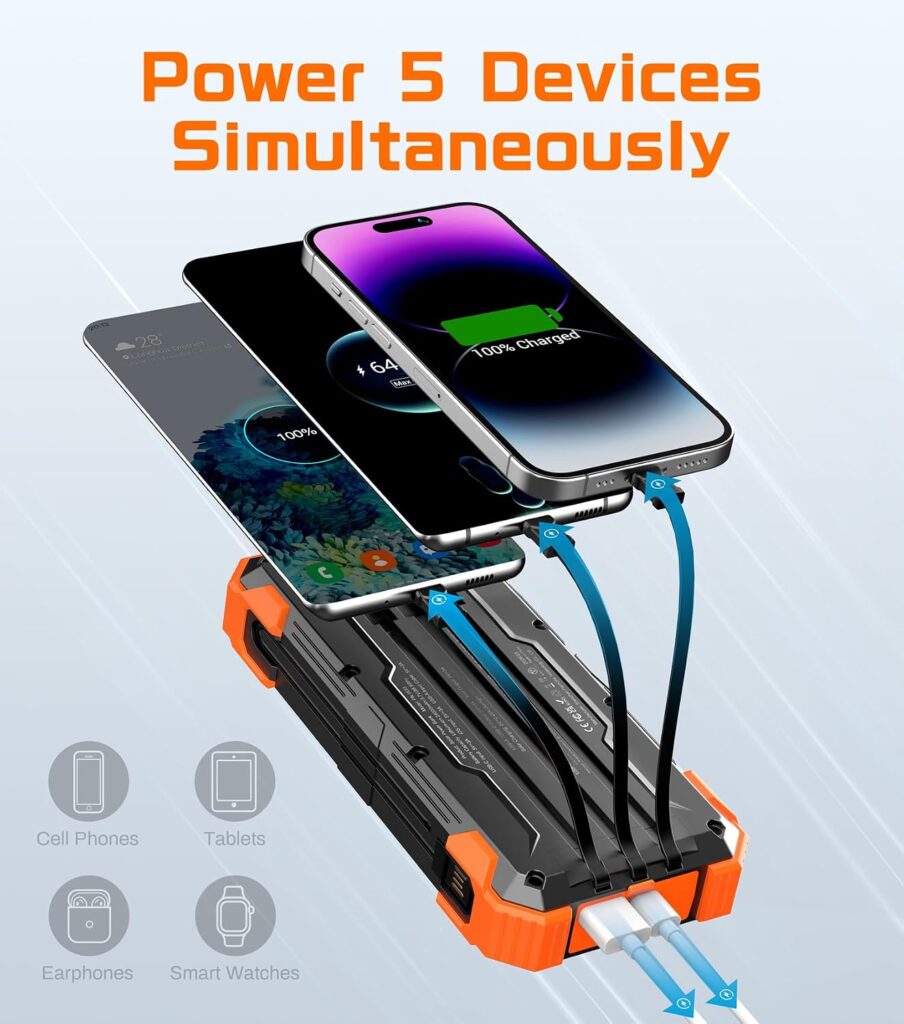
If you’re backpacking with a group and everyone needs power, the GOODaaa is built for that situation. At 24,000mAh it can charge most phones 5 to 6 times, and with 5 outputs and 4 built in cables you can have basically the whole group charging at once without anyone waiting around.
The 15W fast charging is genuinely fast, and it’s got an SOS flashlight and a thermometer built in which are actually useful features when you’re deep in the backcountry. It’s heavier than the BLAVOR so it’s not the move if you’re going solo and counting ounces, but for a group trip where everyone is sharing it the weight gets divided up pretty fast. At $46.99 with a 20 percent coupon at checkout it comes out closer to $37, and it has 2,210 reviews at 4.4 stars.
Which One Should You Buy
For most backpackers the BLAVOR is the pick. It’s $30, it’s tough, and I’ve already done the field testing for you the hard way. Start here.
If you’re going out for 5 or more days or sharing with a group, step up to the Durecopow. More capacity than the BLAVOR at a lower price, with cables built in.
If you’re going with a group and need serious capacity, the GOODaaa handles everyone at once with 5 outputs and 4 built in cables.
And if you’re planning a week deep in the backcountry and want unlimited power potential, pair the BigBlue 28W panel with whichever bank you pick. The faster charging in good sun is worth it on trips that long.
What You Actually Need to Know Before You Buy
Capacity is measured in milliamp hours or mAh. Most smartphones have a battery somewhere between 3,500 and 4,500mAh. A 10,000mAh bank gets you roughly two full charges. Do that math against how many days you’re going out and how heavily you use your phone.
On solar charging: the panels built into these banks are small. They work, but in real conditions expect maybe 1 to 2 percent charge per hour in direct sun. The move is to leave home with a fully charged bank and let the solar keep it topped off throughout your trip. That’s how you actually stay powered up out there.
On waterproofing: if a product doesn’t tell you it’s waterproof it probably isn’t. Look for IP65 or higher if this matters to you. Rain happens. River crossings happen. Chaotic cliff jumping situations happen.
On ports: if you’re solo, one USB-A port is fine. If you’re with a group, grab something with at least two ports. Charging time becomes a whole group negotiation otherwise and nobody wants that.
The Bottom Line
You can do a lot of trips without ever needing a power bank. But when you’re that far from the trailhead and your phone is your navigation, your camera, and your emergency lifeline, having it die isn’t just inconvenient. It changes the situation.
Bring it charged, clip it to your pack, let the sun do its thing on the way in, and stop thinking about it. That’s the whole play.
Check the BLAVOR on Amazon Check the Durecopow on Amazon Check the BigBlue 28W on Amazon Check the GOODaaa on Amazon
Disclosure: This page contains affiliate links. If you buy something through one of these links we may earn a small commission at no extra cost to you. We only recommend gear we would actually use.